Exploring the Museum of Lasers and Scientific Instruments

The Department of Physics preserves an important part of its history: the Museum of Lasers and Scientific Instrumentation, a place where visitors can trace the evolution of laboratory practice in engineering physics between the 19th and 20th centuries.

Rinaldo Cubeddu, former head of the Department and now Professor Emeritus, a pioneer in the use of innovative laser systems and a leading figure in biophotonics, recounts the stages that led to the museum’s creation and development.
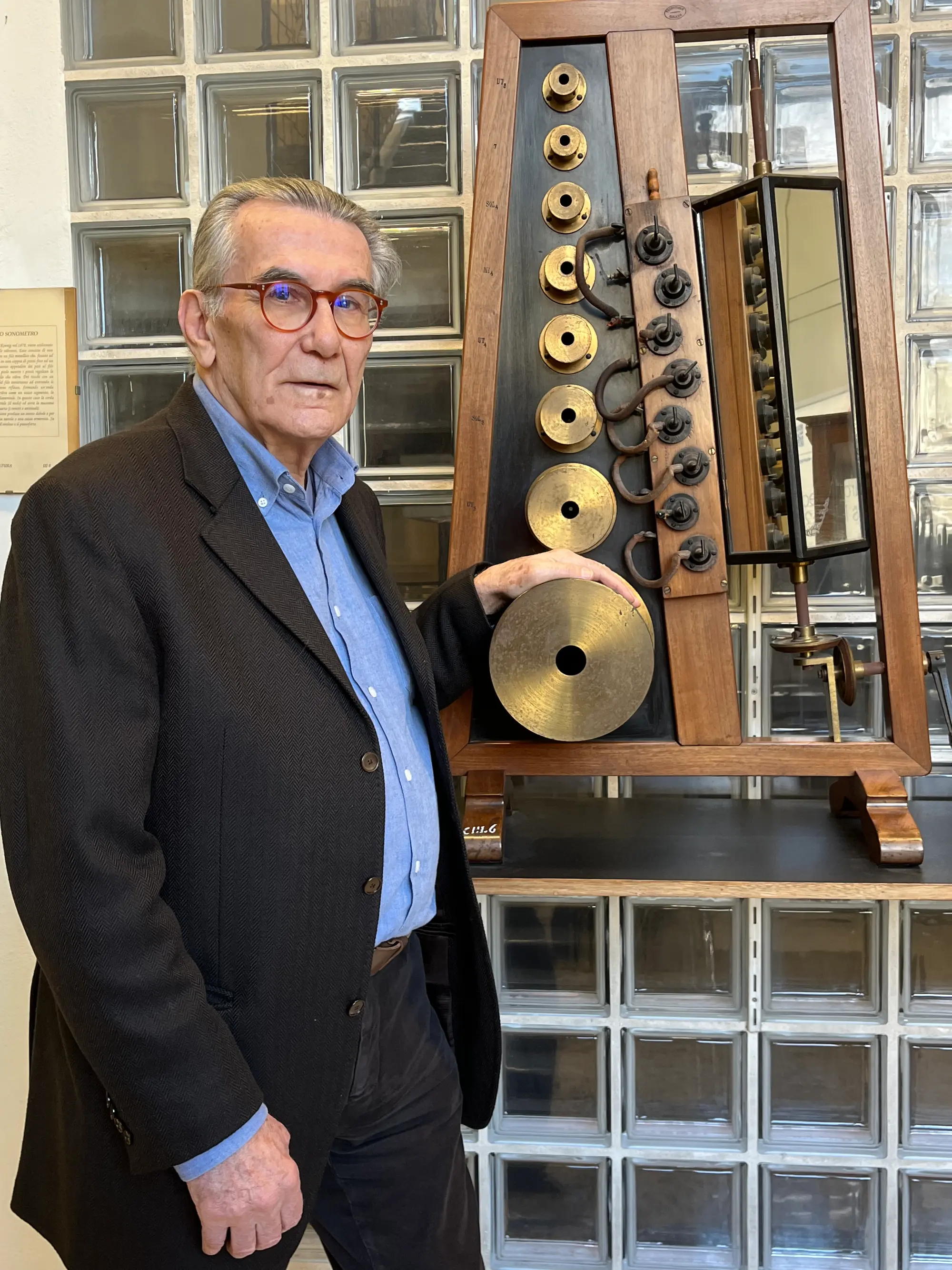
Professor Emeritus Rinaldo Cubeddu of the Department of Physics

When was the Department of Physics’ Historical Museum established?

The museum was established in the early 1980s, when scientific instruments dating from the first half of the 20th century were discovered in the space under the steps of the Department’s lecture theatre.

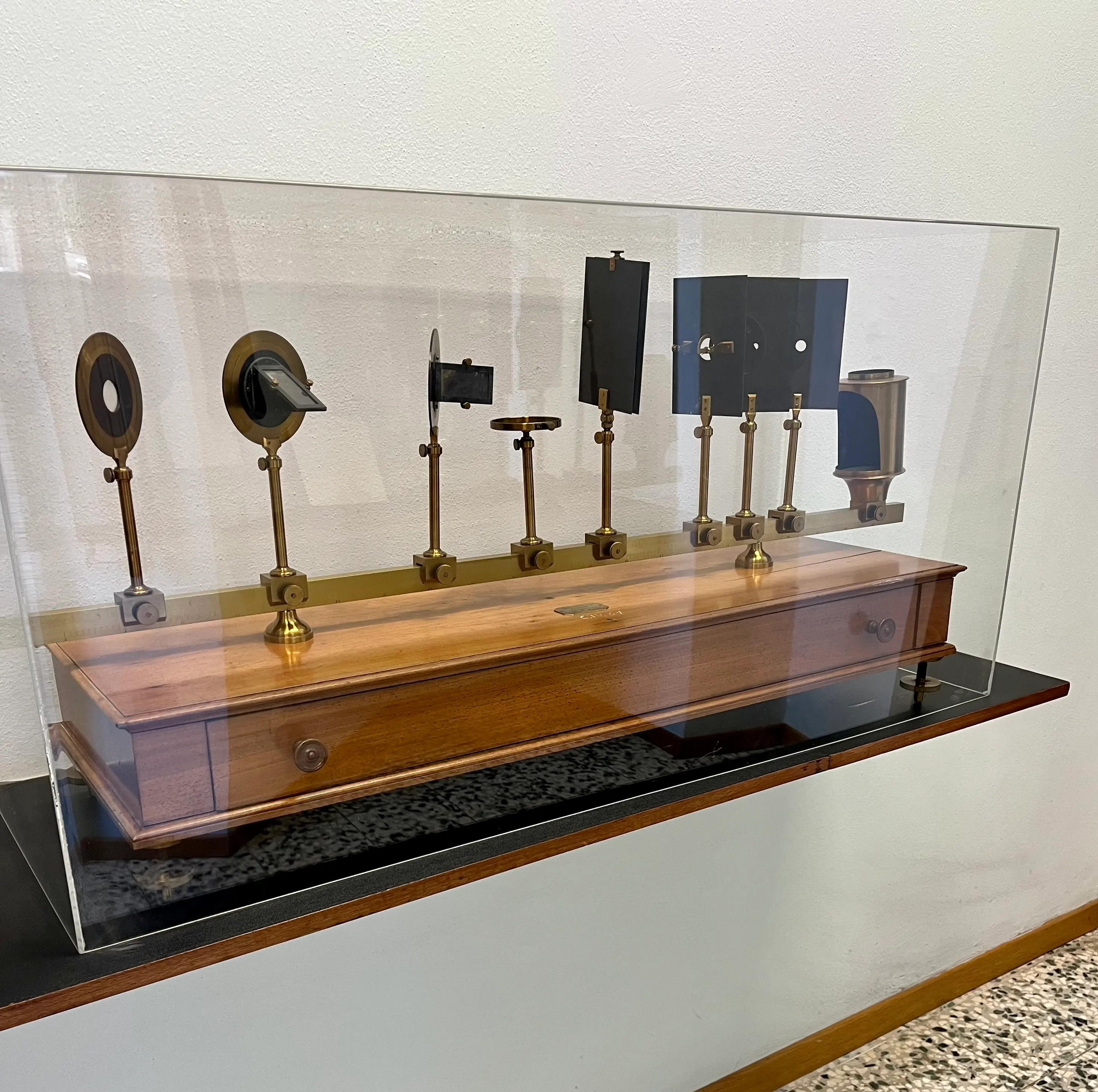
These are laboratory and teaching instruments, often made of brass, covering various disciplines of physics: from mechanics to acoustics, and from electromagnetism to optics.

Along with the instruments, the inventory book was also recovered, allowing the name of each device to be traced via its catalogue number. Several fourth- and fifth-year students from the Electrical Engineering and Nuclear Engineering degree courses took charge of cleaning the artefacts and drafting a brief historical and functional description for each one.

Subsequently, the instruments were organised by discipline, accompanied by an explanatory sheet, and displayed inside three large period wooden cabinets with glass doors; the larger ones, however, are presented individually.

And what about the Laser Museum?

In the early 1990s, on the initiative of Orazio Svelto, founder of the first laser research groups in Italy, the Laser Museum was opened, dedicated to the memory of Carlo Alberto Sacchi.

The first prototypes of solid-state, picosecond and nitrogen lasers produced in Italy by the Department of Physics are on display, housed in display cases along the corridor on the ground floor.

Subsequently, thanks to collaboration with researchers from the C.I.S.E. laboratories in Milan, CSELT in Turin and the company Italtel, the first prototypes of gas and semiconductor lasers produced in Italy were also sourced and exhibited.

The information displays in the museum describe both the current applications of the various types of laser and the pioneering early applications developed at the Polytechnic, particularly in the field of ultrashort laser pulses and the use of lasers in biomedicine.

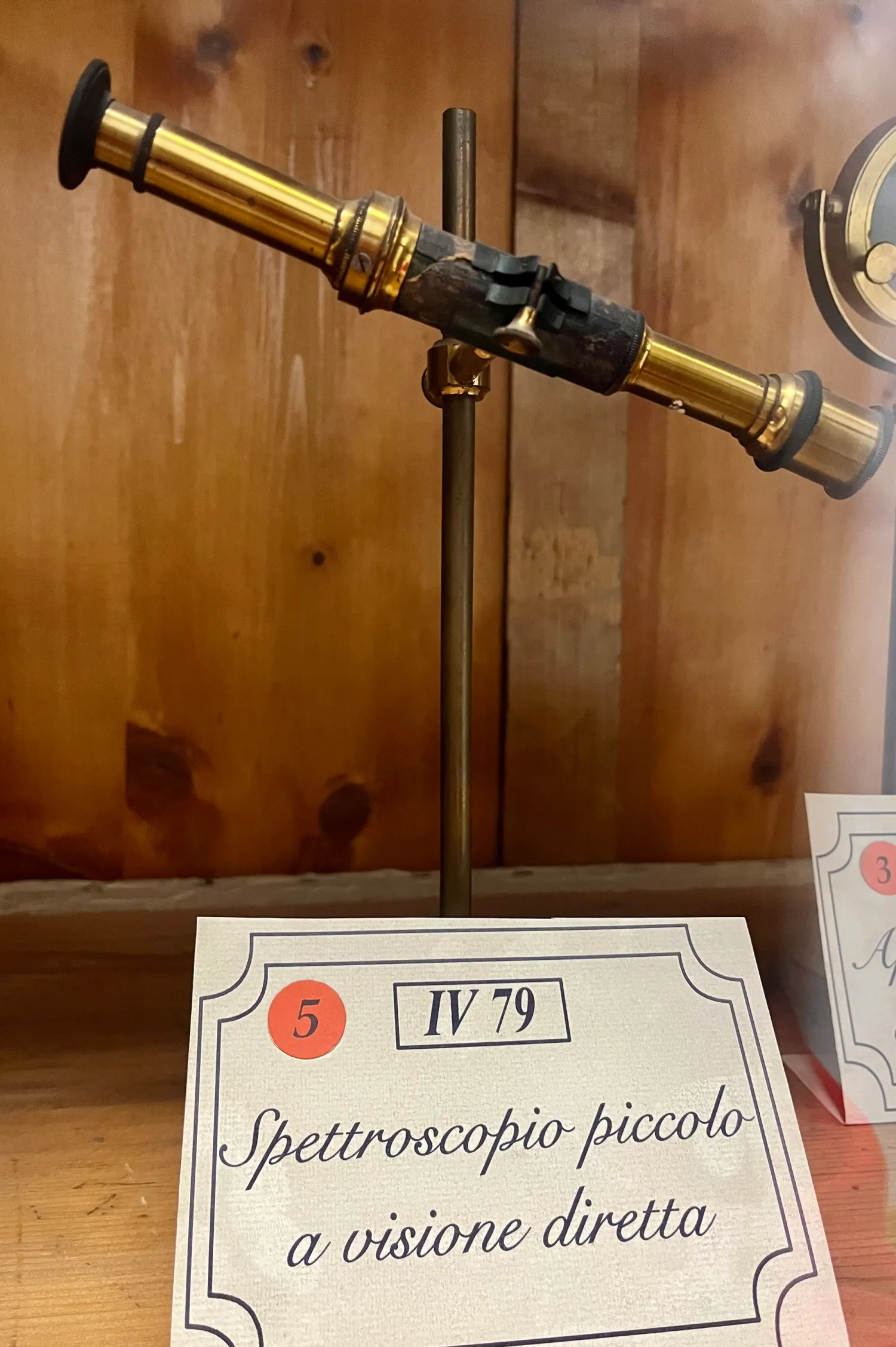
Small direct-view spectroscope
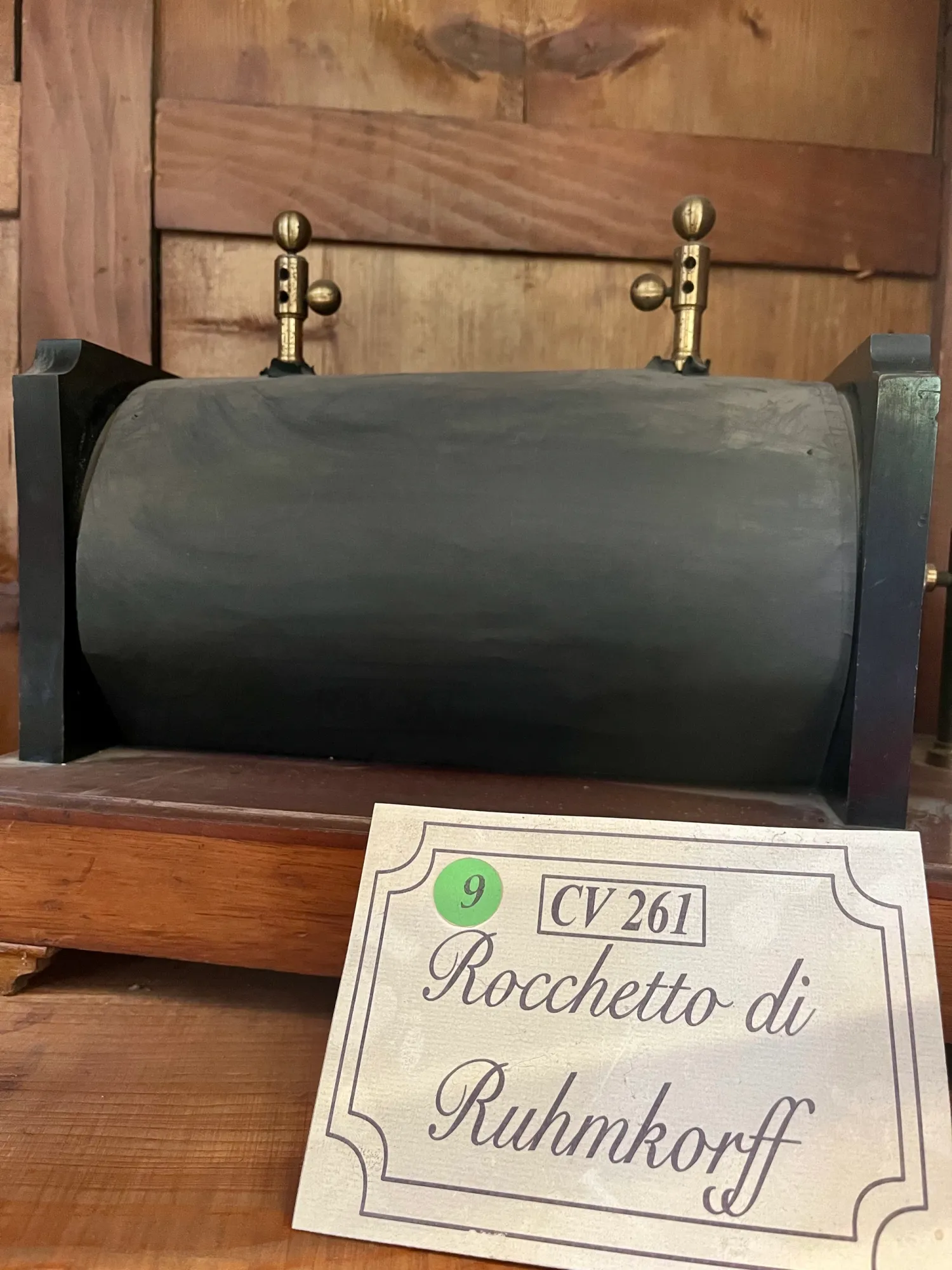
Ruhmkorff roll

Why visit the Laser Museum?

The museum now features a new exhibition area, located near the laboratories where ultrashort laser pulses are generated, with durations ranging from a few femtoseconds (10⁻¹⁵ s) up to several tens of attoseconds (10⁻¹⁸ s).

In this section, visitors can see the first commercial prototype of an amplified titanium-sapphire laser system, capable of generating high-energy pulses lasting a few tens of femtoseconds.

The system is based on the technique of chirped pulse amplification (CPA), developed in 1985 by Gérard Mourou and Donna Strickland, a breakthrough that revolutionised ultrafast optics and led to the Nobel Prize in Physics.

Today, CPA not only enables laser pulses with peak powers in the order of petawatts (10¹⁵ watts) but also paves the way for attosecond science, which studies the ultrafast movements of electrons. This field was recognised with the Nobel Prize in Physics, awarded to Pierre Agostini, Ferenc Krausz and Anne L'Huillier.

A thesis to tell the museum’s story: how did it go?

“Two students, Gabriele Valenzani and Giulia Valle, whom I had the pleasure of supervising, undertook the task of systematically cataloguing the instruments in the Historical Museum and producing an illustrated volume, complete with descriptive entries and technical specifications, organised by category to make it easier to consult,” explains Cubeddu.

The thesis, entitled “Experiment. Stories of Engineering Physics from the Politecnico di Milano”, is now a valuable tool for promoting and making this heritage accessible.

It can be consulted at the following link.

Share on: