
Date
01/10/2026 - 29/01/2027
Time
10:00 - 12:00
Location
Didattic room Via Colombo
Places available
Thirty seats in total
Responsible teacher
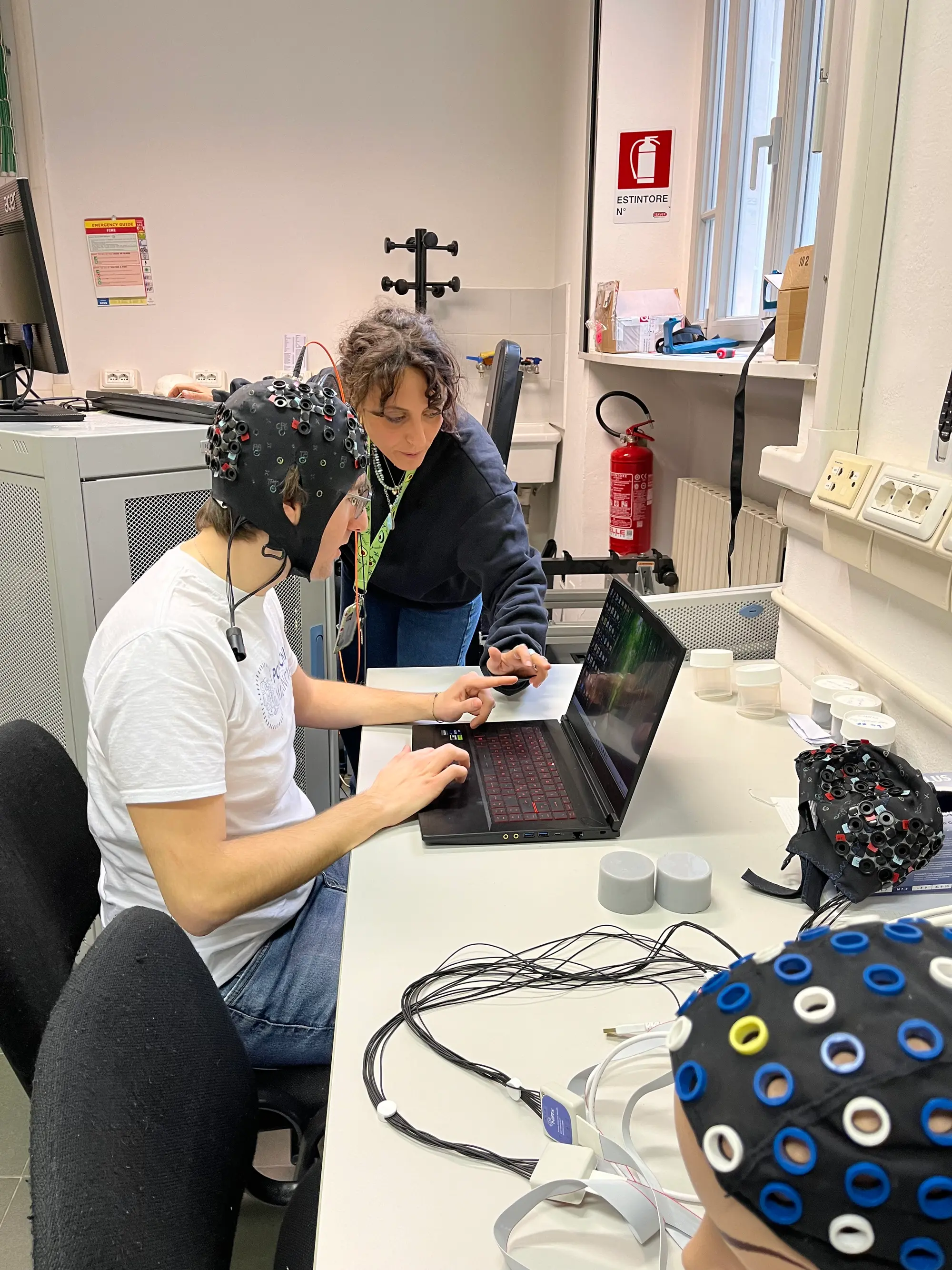
How can tissue oxygenation be measured using light?
Through a series of experiments, students will discover the principles of optics and photonics underpinning this and other biomedical applications.
The course introduces pupils to the experimental method for discovering the secrets of optics and photonics as they relate to the human body.
The experiments will cover the following areas:
- Sunlight and the retina. A demonstration of how sunlight is directed to the retina to form an image. Using a kit, which the pupils will handle themselves, they will be able to understand how to correct common vision defects. The physics-related skills reinforced will be: ray optics and lenses.
- Light and infrared. Demonstration of how near-infrared light interacts with the human body, leading to the quantification of oxygen levels in the brain or muscles (medical application). Pupils will explore the concept of light propagation in scattering media through simple culinary experiments (light propagation in various foods and drinks) and then, based on this experience, attempt to apply these concepts to the human body.
- Comparison with the natural world. Where do we find the same effects? We will attempt to recreate a sunset in the classroom and explain this phenomenon.
- A brief overview of other phenomena involving the interaction of light with biological tissues, such as fluorescence (to spark the pupils’ curiosity and leave them wanting to continue exploring…).
Laser pointers, continuous lights and UV sources will be used for these experiments.
Aim
By the end of the course, students will have taken part in experiments involving the construction and use of small optical set-ups, gaining first-hand experience of the experimental method.