
Today marks the International Day of Light, proclaimed by UNESCO to highlight the fundamental role of light in science, culture, art and sustainable development.
Every year on 16 May, initiatives are organised around the world to raise public awareness of the importance of light in our daily lives and how its applications in science can lead to extraordinary technological and social developments.
Why 16 May?
The date was chosen in honour of Theodore Harold Maiman, an American physicist and electrical engineer who, on 16 May 1960, created the first ruby crystal laser, paving the way for subsequent applications of laser technology.
The first celebration of the International Day of Light took place in 2018, following the International Year of Light promoted by UNESCO in 2015.
What is the aim of this day?
International Day of Light promotes international scientific cooperation and highlights the role of light-based science and technologies in sustainable development, education and peace.
The study of light and its applications has profoundly transformed the way we observe and understand the world. Instruments such as microscopes, X-rays, telescopes, cameras and optical devices are now an integral part of scientific research, medicine, telecommunications and everyday life.
This anniversary also aims to:
- raise public awareness of the importance of light and optical technologies;
- promote science education, particularly among young people;
- highlight the connection between light, art and cultural heritage;
- encourage international collaboration in research and innovation;
- support the development of scientific and engineering disciplines related to photonics and light technologies.
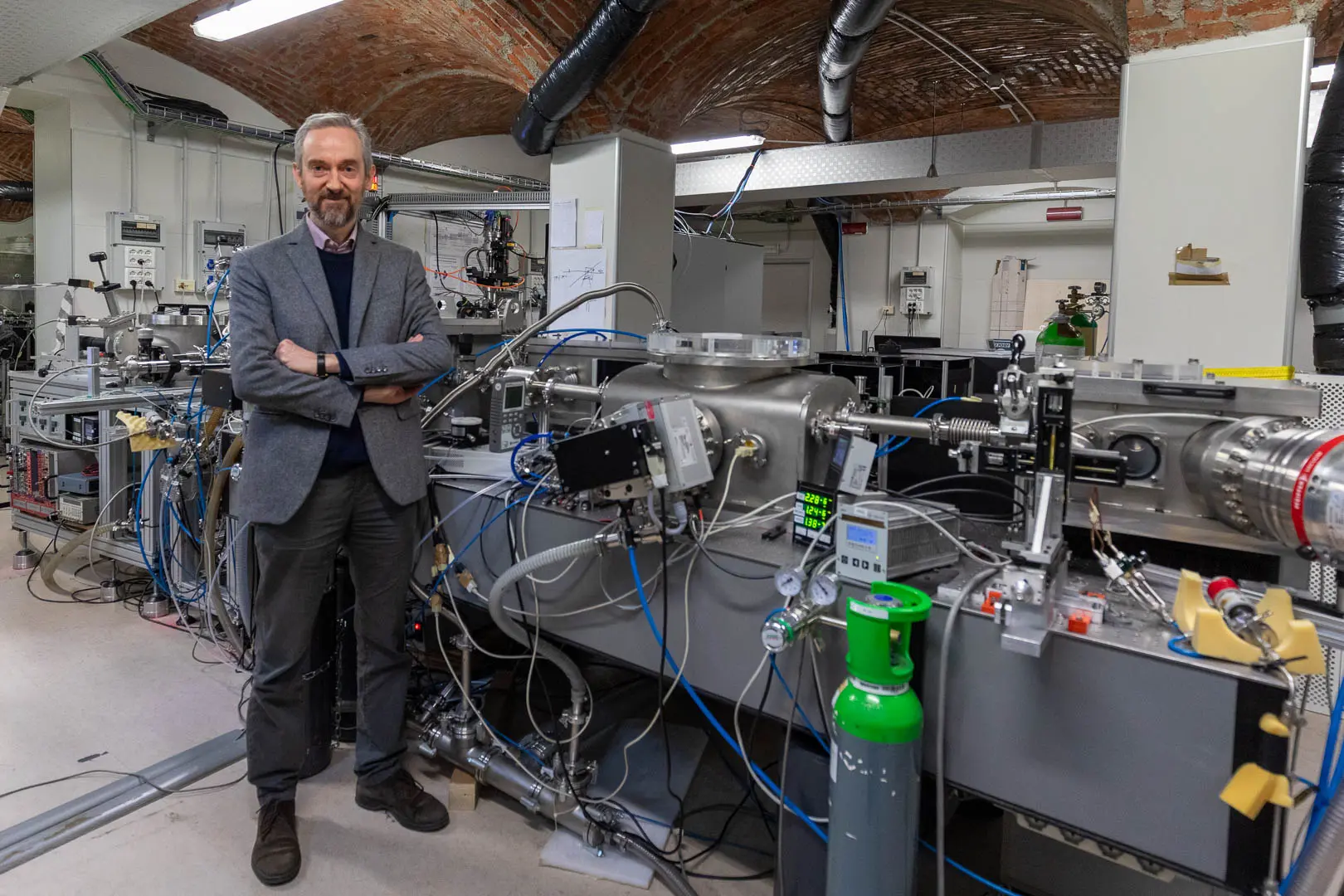
To mark this occasion, we interviewed Mauro Nisoli, Full Professor, Head of the Department of Physics and Director of the Attosecond Research Center, who spoke to us about the significance of light in scientific research and its role in the field of physics.
You can read the interview at the following link.